

Why lead details need proper attention
Junctions kept weatherproof
Lead protects the spots where walls, chimneys and roof slopes meet.
Room for thermal movement
Correct fixing lets the lead move naturally instead of splitting under stress.
Matched to surrounding roof
Leadwork must tie in with the covering and underlay, not fight against them.
Protecting the roof's most vulnerable joins
Leadwork protects the awkward parts of a roof where water is most likely to test the joins. Flashings, aprons, soakers and valley details all help keep rain out around chimneys, walls, changing slopes and roof penetrations. In Banbury, we repair and renew roof leadwork where cracks, splits, lifting edges, open joints, fatigue or staining show the detail is starting to fail. With LG ROOFING & UPVC LTD, the job is to keep those vulnerable junctions weatherproof without ignoring how the surrounding roof covering behaves.
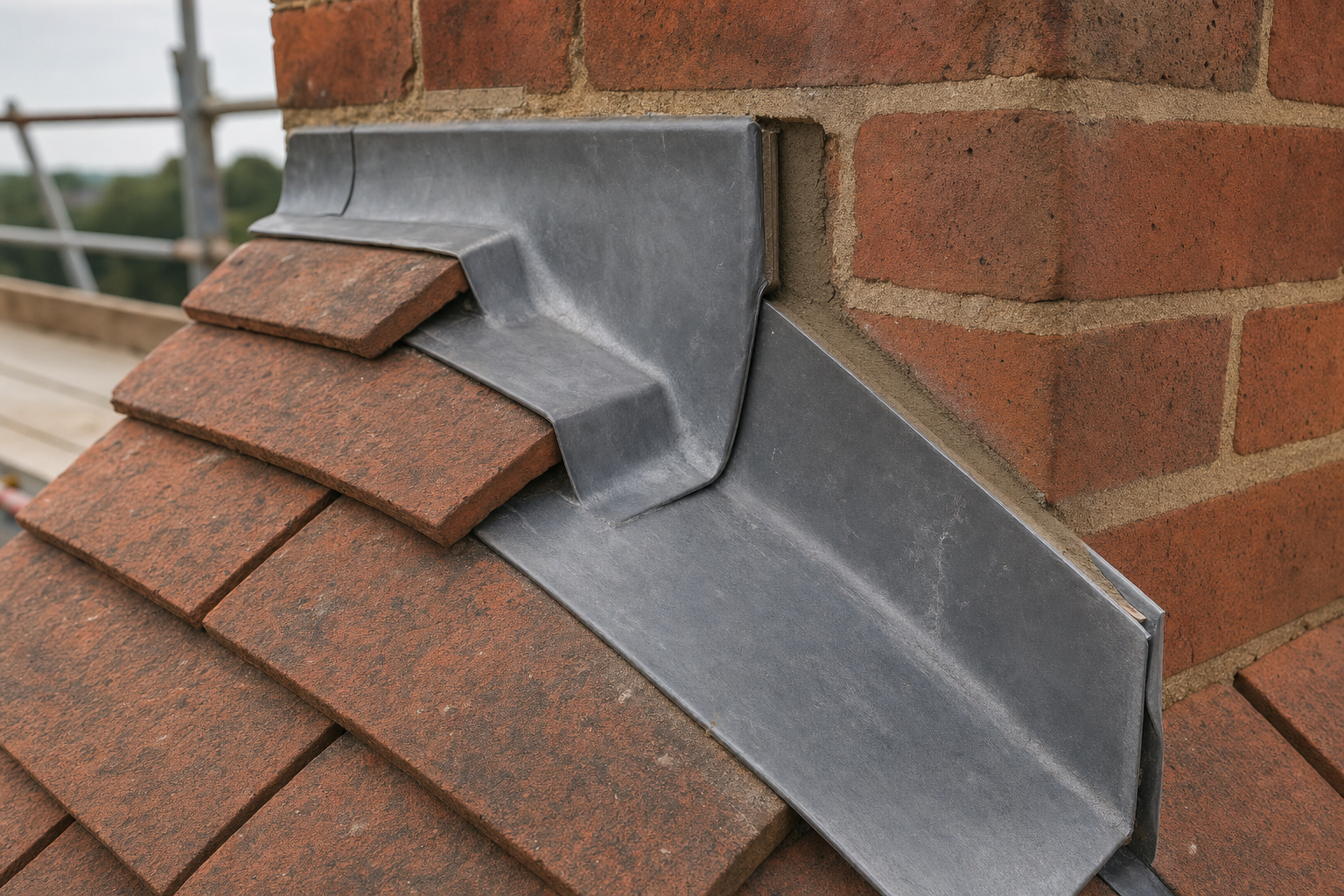
Lead fitted to move and shed water properly
Lead needs the right sizing, laps, shaping and fixing so it can shed water while still moving naturally with changes in temperature. Choosing LG ROOFING & UPVC LTD means we look at whether existing lead can be dressed and secured, whether a damaged section should be replaced or whether a whole detail needs renewing because the wear is more widespread. The finished leadwork must tie in properly with tiles, slate, mortar and underlay, or water will simply find a new way in.
Frequently asked questions
When should roof flashing be replaced rather than repaired?
If the lead is badly cracked, split, fatigued, lifting in several places or no longer tying in properly with the surrounding roof, replacement may be the better route. Smaller faults can sometimes be dressed and secured, but that depends on how much sound material is left to work with.
Can faulty leadwork cause internal damp?
Yes. Lead details sit at key junctions around chimneys, walls, valleys and penetrations, so when they fail, water can bypass an otherwise decent roof covering. Damp patches indoors may be caused by a flashing fault some distance away, which is why the whole junction needs checking.
Why does lead need room to move?
Lead expands and contracts with changes in temperature. If it is the wrong size, fixed badly or forced into a detail without allowance for movement, it can split, lift or fatigue over time. Good leadwork has to manage water and movement together, not just look tidy on the day.