
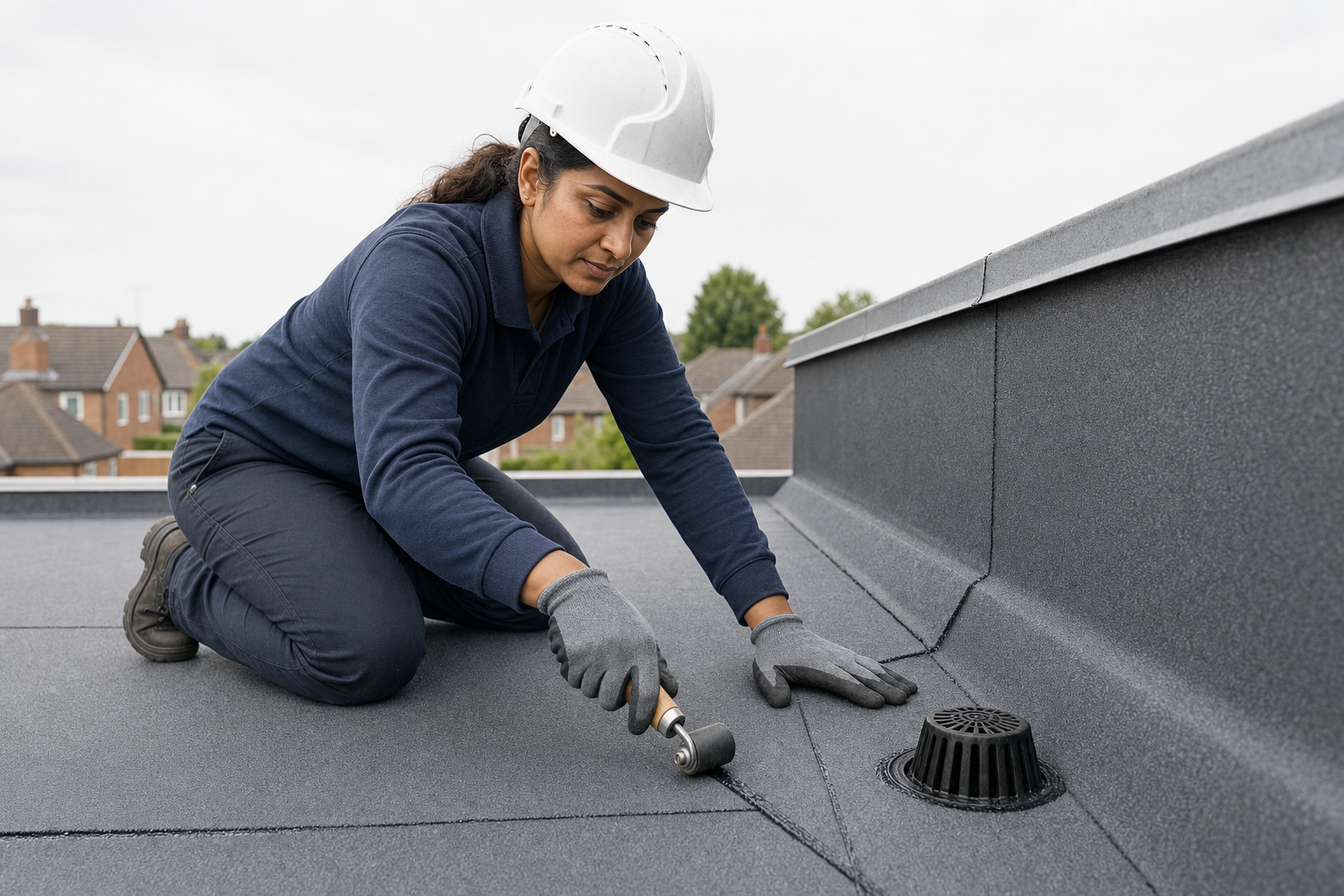
What a felt roof needs to perform well
Layered waterproofing build-up
Several bonded layers work together to create a robust flat-roof covering.
Finish chosen to suit use
Gravel and ballast finishes can protect the roof and complete the final surface.
Weak points checked early
Joints, edges and outlets are watched before water can soak into the deck.
Layered felt systems built to keep water out
Built-up felt roofing is a layered bituminous system used to waterproof flat and low-slope roofs. When it is laid well, with sealed laps and proper falls, it gives a robust covering that suits many domestic and commercial roofs. In Banbury, we fit and repair felt roofing with options such as gravel or ballast finishes, which help protect and complete the roof surface. With LG ROOFING & UPVC LTD, the important part is how the whole system is assembled, not just the top layer you can see.
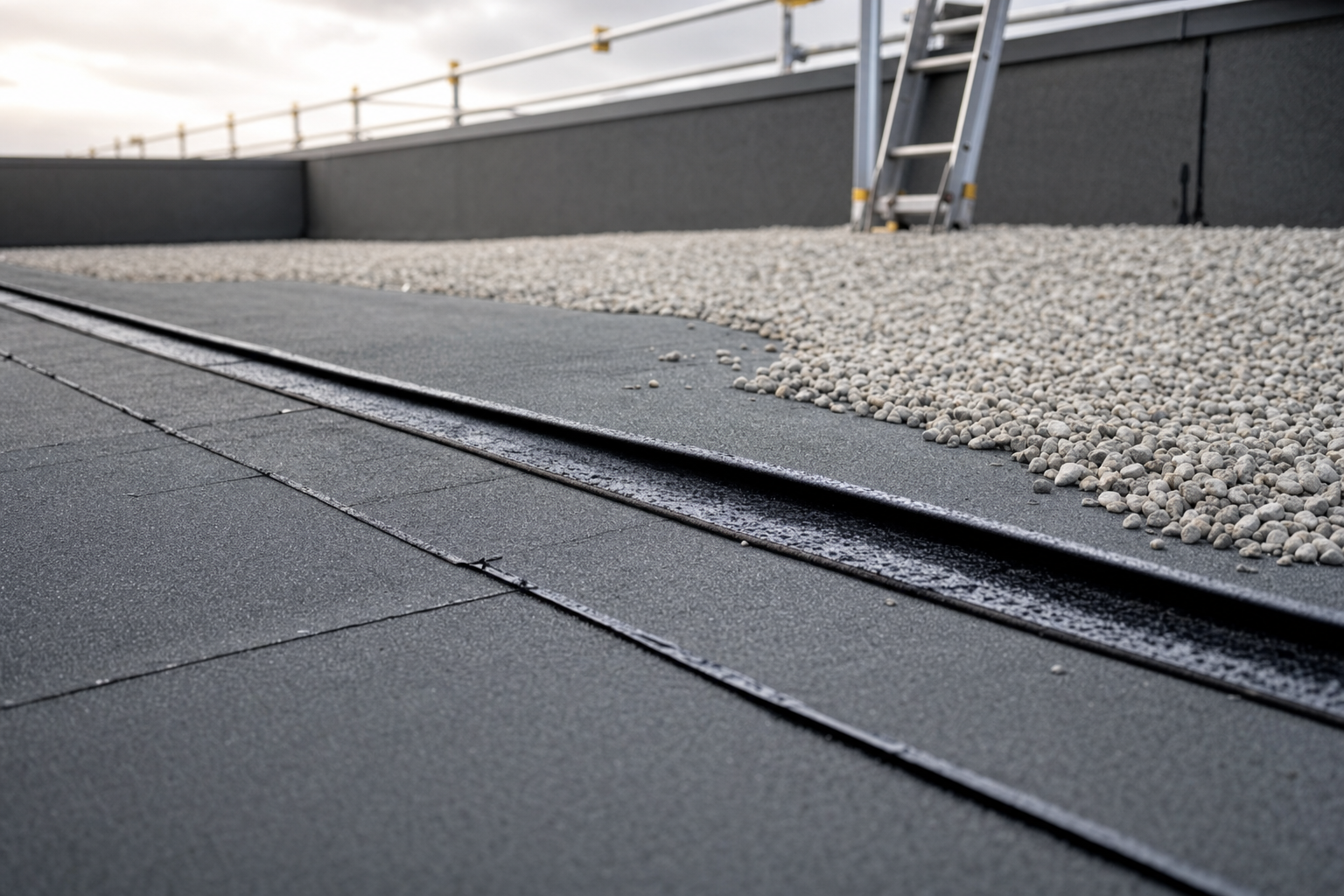
From deck preparation to drainage points
Good felt work starts with deck preparation and continues through bonded layers, secure edges, clear outlets and careful detailing around penetrations. Choosing LG ROOFING & UPVC LTD means we also look at common faults such as splits, blisters, open laps, surface wear and ponding water before advising on repair or renewal. Regular inspection of joints, edges and drainage points helps pick up developing trouble before water reaches the deck and turns a modest job into a much larger one.
Frequently asked questions
What are gravel and ballast finishes used for?
They help protect and complete the felt roofing system while also affecting the final appearance. The right finish depends on the roof use and design, but in simple terms they are not just decorative extras. They play a practical part in the finished build-up of the roof.
Can blisters or open laps in felt be repaired?
Sometimes, yes, if the problem is local and the rest of the system is still sound. We still need to check the wider surface, the edges, the outlets and any ponding water, because a local fault can be part of a broader pattern of wear that makes repeated patching poor value.
How do you decide between repair and renewal?
We look at the age and spread of the defects, the condition of the deck below, the state of the laps and edges, and whether water has already started getting beneath the system. A small split may suit repair, while widespread wear or repeated leaks may point to a fuller renewal.