
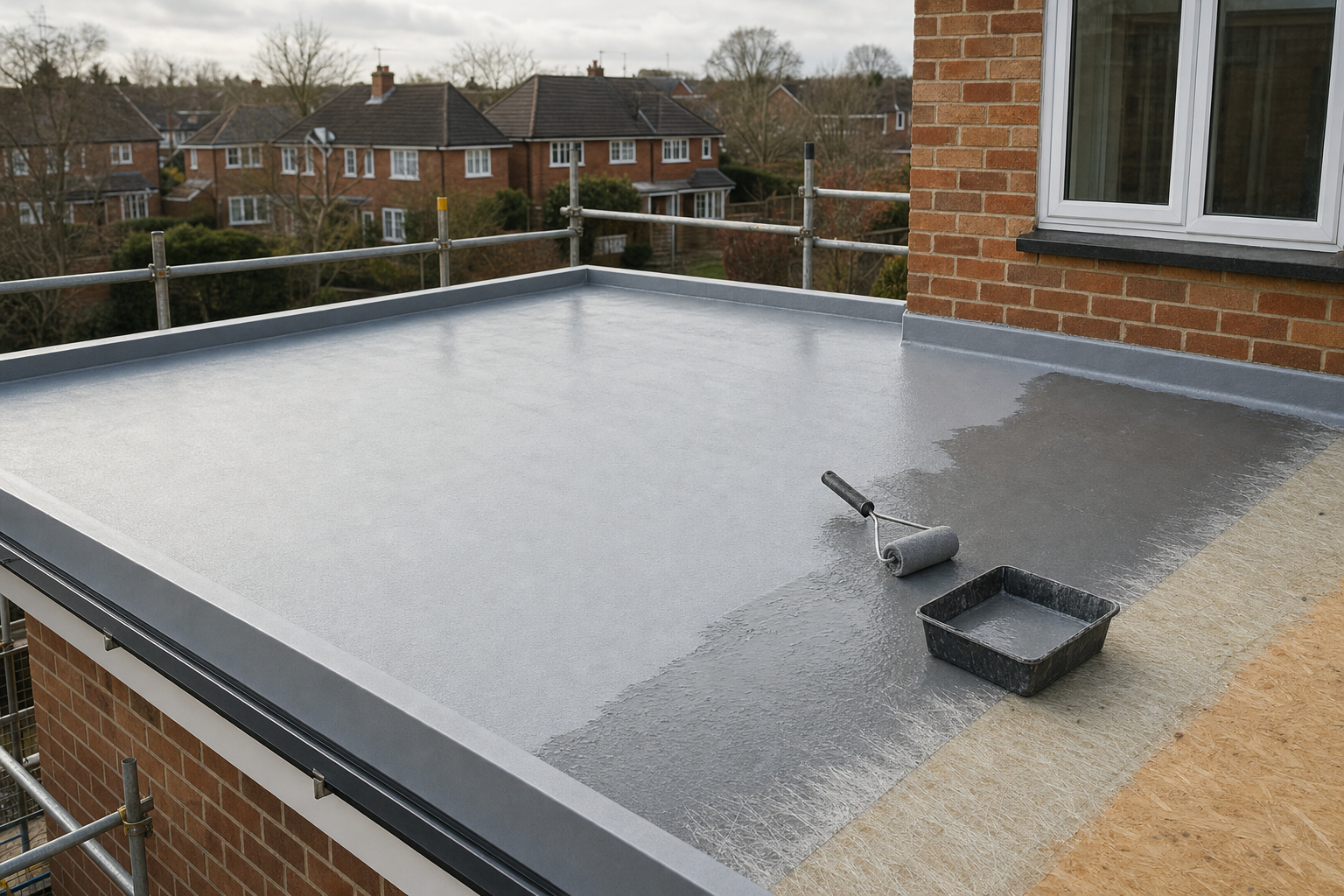
Why GRP suits some roofs so well
Seam-free main surface
GRP creates a continuous waterproof field across the main flat roof area.
Strong edge detailing
Outlets, trims and abutments are shaped to keep the waterproof finish unbroken.
Useful on awkward shapes
GRP can suit extensions and garages where roof edges need neat detailing.
A smooth, joint-free surface where it fits best
GRP fibreglass roofing uses resin and glass-fibre reinforcement to create a rigid, joint-free waterproof surface across the main roof area. It is often suited to extensions, garages and roofs with more detailed edges, where a neat finish matters as much as the waterproofing. In Banbury, we fit fibreglass roofing after looking at the roof size, shape, access and expected foot traffic, because those factors affect whether GRP is the right choice. With LG ROOFING & UPVC LTD, the result should be a solid surface with the right detailing at every edge.
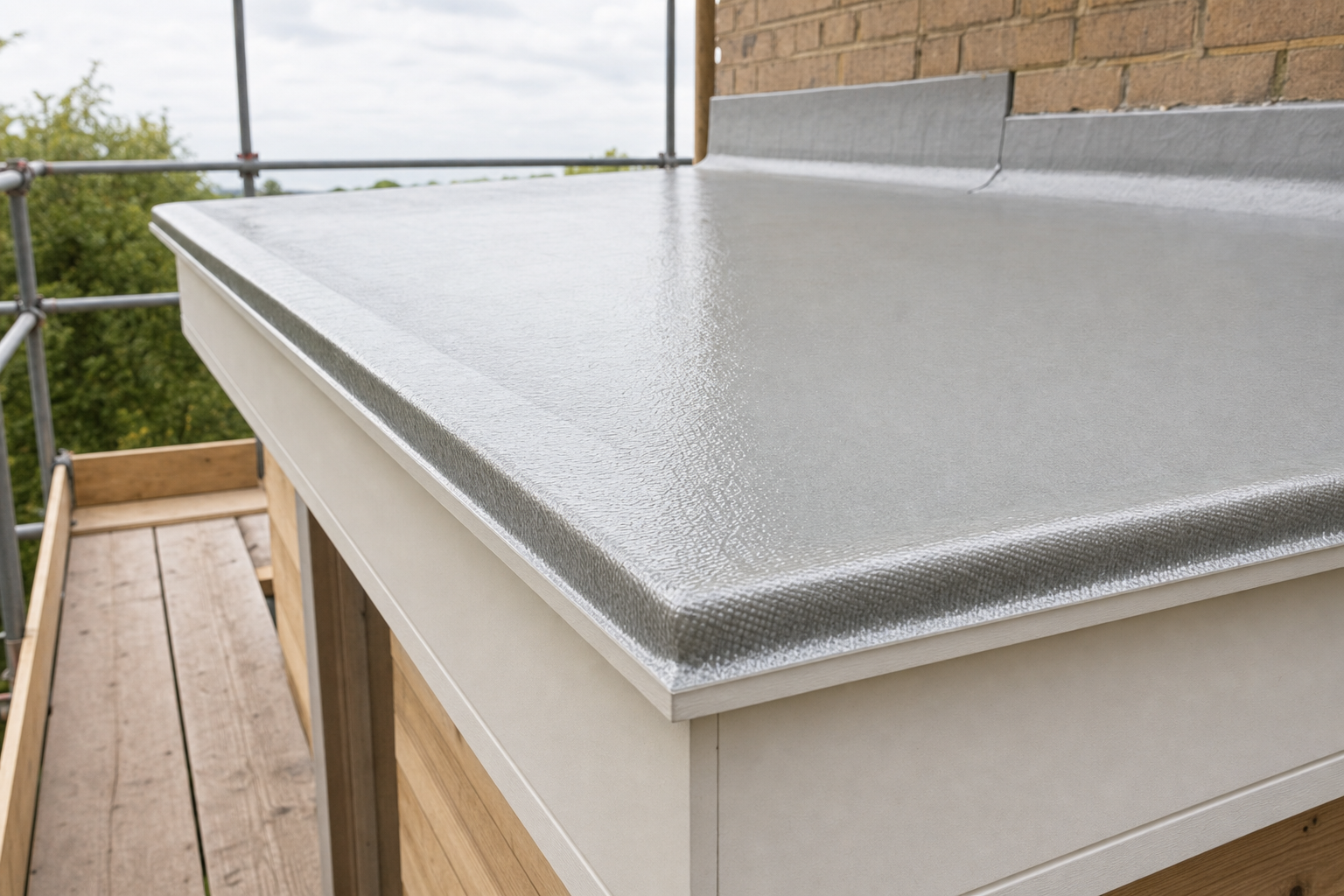
Preparation and edge details come first
A sound, dry deck is essential before any reinforcement or resin goes down, which is why preparation is such a big part of the job. Choosing LG ROOFING & UPVC LTD means the build-up includes the deck check, reinforcement, resin application, edge trims and protective topcoat, with close attention to outlets, abutments and penetrations. Local cracks, chips or damaged details can sometimes be repaired, but repeated patching is not always the best spend if the wider surface has started to fail.
Frequently asked questions
Where does GRP fibreglass roofing work best?
It often suits extensions, garages and flat roofs with more detailed edges, where a neat, rigid finish is helpful. Roof size, shape, access and expected foot traffic all influence whether GRP is the right option, so the roof layout matters as much as the material itself.
Can damaged fibreglass roofing be repaired?
Small cracks, chips or damaged details can sometimes be repaired, especially when the rest of the surface is still sound. If the wider roof has started to fail or has been patched many times already, a new surface may be the more dependable answer and the better long-term spend.
Why does the deck need to be dry before GRP goes down?
GRP relies on a sound, correctly prepared base. If the deck is damp or unstable, the finished surface can be compromised from the start. Proper preparation helps the reinforcement, resin and topcoat bond as they should, which is vital for a roof expected to stay watertight over time.